
The press is filled with stories predicting the demise of linear broadcast television. And certainly it is true that we face many obstacles, including streaming services taking our viewers and advertisers, cable cord cutting eroding our retransmission revenues, and our own networks climbing on the streaming bandwagon. But what if there was a new broadcast standard that held the promise of connecting broadcasters not only to television receivers, but also to 5G wireless smartphones and tablets, opening a whole new market to our transmission? The good news is that there is such a standard and it is called 5G broadcast. And because 5G broadcast (unlike ATSC 3.0) was adopted as part of the 3G PP 5G standard, it holds the key to our future. All we have to do is join large portions of the world in adopting this standard.
I have the greatest respect for my longtime friend Mark Aitken, who has advocated with great skill to try to make ATSC 3.0 the American standard for next-gen TV. And I have great admiration for Sinclair Broadcasting and its principal, David Smith. David probably is the only group station owner who has seated himself at a bench and actually built a UHF transmitter.
Let me state upfront that no one is paying me to write this article and that I do not own a single share of stock in Verizon, AT&T, T-Mobile, mobile chip makers or phone manufacturing companies. My investments are in boring municipal bonds with no relation whatsoever to the television or telecom industries.
The broadcasting industry is going to transition from ATSC1 to a next generation standard. The two principal choices available to us are (1) ATSC 3.0 and (2) 5G Broadcast.
An international standards body called 3GPP sets the standards for all cellular devices in the world. All of the major cellular device manufactures (Apple, Samsung, etc.) build their devices in compliance with the 3GPP standards. 3GPP compliant devices only receive signals that are part of the 3GPP family of 5G global standards; This means that broadcasters that transition to the 5G Broadcast standard will be able to transmit directly to the hundreds of millions of next generation 5G smartphones and tablets.
By contrast, ATSC 3.0 is not a part of the 3GPP family of cellular standards, and, therefore, cannot and will not be able to be received by smartphones and tablets compliant with the 3GPP standards. For this reason, Sinclair and others tried diligently to get ATSC 3.0 approved by 3GPP as part of their standards. Ultimately, 3GPP refused to incorporate ATSC 3.0 into its
LTE-based 5G Broadcast is better suited for integration with 3GPP modems because it reuses nearly all existing LTE/5G components and hardware, whereas ATSC 3.0 requires different implementations across critical building blocks.
So far public and private broadcast operators in Germany, France, Italy, Austria, Estonia, Spain and the Czech Republic came forward and announced their intentions to deploy the 5G Broadcast standard. And there is continuing interest in 5G Broadcast in Malaysia, China and Brazil, with active trials and evaluation of the technology. With several large countries committing to 5G broadcast, I expect TV set manufacturers to incorporate 5G broadcast receivers to meet marketplace demand–no government mandates necessary.
Because of trial broadcasts around the world, including an FCC approved trial by low power Station WWOO in the Boston market, we don’t need to speculate about whether 5G Broadcast can be received by 5G smartphones. Below is a photo of the WWOO broadcast being received by a prototype next generation smartphone!
SIMPLY STATED, IT WORKS!!
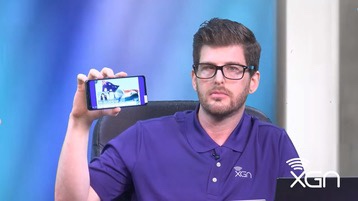
So, American full power TV broadcasters face the following choice – Do you want to transition to a next-gen standard that broadens your market to include reception by 5G cellular devices, or do you want to transition to a standard that cannot be received by those devices?
The question answers itself.
Advocates for ATSC 3.0 try mightily to think of applications that could make up for their standard’s lack of access to 3GPP cellular devices. They argue that car manufacturers will go to the expense of adding ATSC 3.0 receivers to their cars to receive software downloads. But since all cars (even my low-tech minivan) already have 5G transceivers that serve that function, that seems very unlikely. Or they argue that an ATSC 3.0-based new GPS system will be the key to our future. That seems a real stretch, and certainly no substitute for gaining access to 3GPP cellular devices.
So why is Sinclair pushing so hard for ATSC 3.0? The simple answer is that they have a conflict – not a bad or evil conflict – just a conflict. Sinclair owns a vast portion of the intellectual property that makes up the ATSC 3.0 standard. That means that they stand to reap a fortune in royalties if American full power broadcasters adopt ATSC 3.0. All other TV broadcasters can make their choice without being burdened by that conflict!
In my opinion the only thing that can save broadcasting from extinction is to transition to 5G Broadcast and transmit directly to both TV receivers and 3GPP cellular devices and thereby join the mobile future.
All we have to do is do it!
 boulderpreston.com